Dry vs Dehydrated Skin: How to Tell the Difference (and the Routine That Actually Helps)
Your skin feels tight, looks flaky, and no matter how much lotion you slather on, nothing seems to help for long. But here's the question most people never ask: is your skin actually dry, or is it dehydrated? The difference matters more than you think, because treating one condition with solutions meant for the other can leave you frustrated, uncomfortable, and still dealing with problem skin.
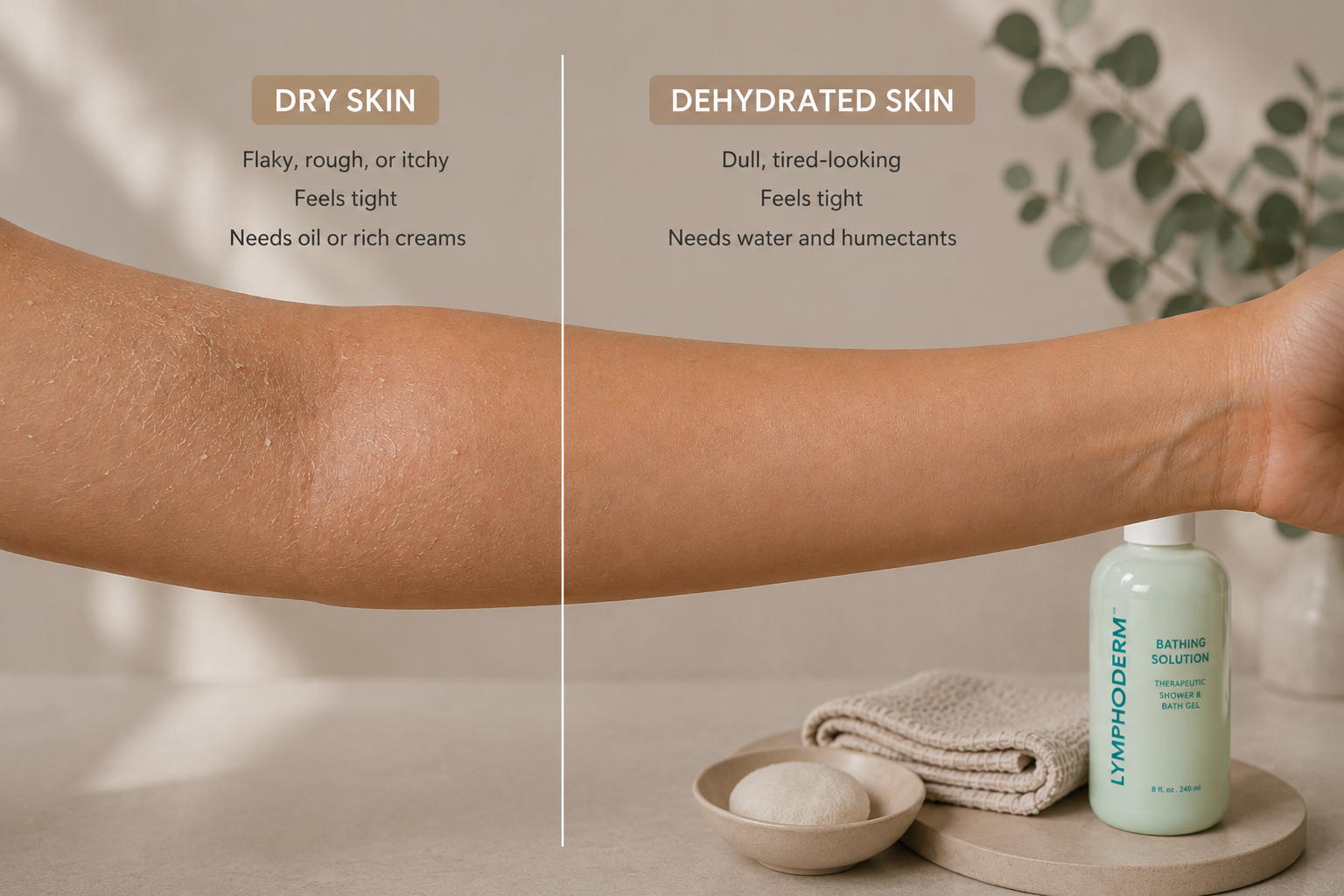
Why the Dry vs Dehydrated Skin Distinction Actually Matters
Most people use "dry" and "dehydrated" interchangeably when talking about their skin. But in skincare terms, these are two different conditions with different causes and different solutions.
Here's why understanding the difference changes everything:
Different root causes – Dry skin lacks oil, dehydrated skin lacks water
Different symptoms – While they can look similar, the underlying issues are distinct
Different treatment approaches – Using heavy oils on dehydrated skin or light humectants on dry skin won't solve the problem
Different timelines – Dehydration can be temporary and situational, while dry skin is usually a consistent skin type
You can have both – Many people experience both conditions simultaneously, which requires a balanced approach
Getting this right means you stop wasting money on products that don't work and finally give your skin what it actually needs.
What Is Dry Skin? (The Oil Problem)
Dry skin is a skin type. It's a chronic condition where your skin doesn't produce enough sebum (natural oils) to maintain its protective barrier and keep moisture locked in.
What causes dry skin:
Genetics – Some people are simply born with sebaceous glands that don't produce much oil
Aging – Oil production naturally decreases as we get older
Hormonal changes – Menopause, thyroid conditions, and other hormonal shifts can reduce sebum production
Climate – Living in cold, dry environments can worsen the condition
Overwashing – Using harsh cleansers strips away the limited oils your skin does produce
How dry skin feels and looks:
Rough or flaky texture across large areas
Visible dry patches that persist
Itchiness or irritation
Feels tight and uncomfortable, especially after washing
Fine lines may appear more prominent
Skin may crack in severe cases
Dry skin is typically consistent. If you have dry skin, you have it all the time, though it may be worse in winter or after certain activities.
[Internal link to: Fast-Absorbing Body Lotion for Dry Skin]
What Is Dehydrated Skin? (The Water Problem)
Dehydrated skin is a skin condition, not a skin type. It's a temporary state where your skin lacks water content, regardless of how much oil it produces.
What causes dehydrated skin:
Not drinking enough water – Though this alone isn't usually the sole cause
Weather conditions – Dry air, wind, low humidity
Overheating – Hot showers, heated indoor environments
Certain medications – Diuretics, some acne treatments
Compromised skin barrier – When your barrier is damaged, water escapes easily (transepidermal water loss)
Lifestyle factors – Alcohol consumption, caffeine, air travel, intense exercise without proper hydration
How dehydrated skin feels and looks:
Skin feels tight but may also look oily (especially in the T-zone for facial skin)
Dull, lackluster appearance
More pronounced fine lines and wrinkles (they seem to appear suddenly)
Skin absorbs products immediately but still feels uncomfortable
Dark circles under eyes may be more visible
Increased sensitivity or reactivity
Dehydrated skin can fluctuate. You might have it one week and not the next, depending on environmental and lifestyle factors.
The Confusion: Why Oily Skin Can Be Dehydrated Too
Here's where it gets tricky and why so many people misdiagnose their skin concerns.
You can have oily, dehydrated skin.
When skin is dehydrated, it sometimes overcompensates by producing more oil to try to protect itself. This means you can have a shiny T-zone or oily-feeling skin while simultaneously experiencing the tightness and fine lines of dehydration.
This combination confuses people into thinking they don't need moisturizer ("my skin is oily, why would I add more?"), when actually their skin is crying out for water, not oil control.
The solution isn't to strip the oil away. It's to hydrate the skin properly so it stops overproducing oil as a defense mechanism.
The Simple Tests: How to Tell if Your Skin Is Dry or Dehydrated
You don't need a dermatologist appointment to figure out which condition you're dealing with. These simple tests can help you identify the issue.
The Pinch Test (For Dehydration)
Gently pinch a small area of skin on your cheek or the back of your hand. If the skin bounces back immediately, your hydration levels are good. If it takes a moment to return to normal or looks wrinkled, you're likely dehydrated.
What it tells you: This tests skin elasticity, which is directly affected by water content.
The Feeling Test (For Dryness)
Wash your face or body area with a gentle cleanser and don't apply any products. Wait 10-15 minutes and assess how your skin feels.
Dry skin: Feels tight, rough, and uncomfortable almost immediately after washing
Dehydrated skin: Might feel tight initially but also looks dull or shows fine lines
Normal/balanced skin: Feels comfortable and looks normal
The Appearance Test (Visual Assessment)
Look at your skin in natural light without makeup or products.
Signs of dry skin:
Visible flaking or rough patches
Consistent texture across areas
Matte appearance (no shine)
Signs of dehydrated skin:
Fine lines that seem to appear and disappear
Dull, tired-looking surface
Possible shine or oiliness despite feeling tight
The Product Absorption Test
Apply a lightweight moisturizer to clean skin.
Dehydrated skin: Drinks it up immediately, may feel like you need to apply more right away
Dry skin: Takes time to absorb, may need richer products to feel satisfied
Combination: Absorbs quickly but skin still feels uncomfortable
[Internal link to: Lymphedema Skin Care Routine]
Common Scenarios: Which Condition Do You Have?
Let's look at real-life situations to help you identify your issue.
Scenario 1: Tight Skin After Showering
Your skin feels uncomfortably tight and maybe even itchy right after you shower or wash your face.
Most likely: Dry skin, possibly made worse by hot water and harsh cleansers that strip natural oils.
Also consider: Could be dehydration if the hot water is damaging your barrier and increasing water loss.
Scenario 2: Oily But Uncomfortable Skin
Your skin produces oil and may even break out, but it also feels tight and looks dull.
Most likely: Dehydrated skin that's overproducing oil to compensate for water loss.
Solution focus: Hydration with lightweight, water-based products, not oil control.
Scenario 3: Fine Lines That Come and Go
Some days your skin looks smooth, other days you notice fine lines that weren't there before.
Most likely: Dehydrated skin. True aging lines don't appear and disappear; dehydration lines do.
Solution focus: Intensive hydration and barrier repair.
Scenario 4: Rough, Flaky Patches
You have areas of skin that are consistently rough, flaky, or scaly, regardless of the season or your routine.
Most likely: Dry skin that lacks sufficient oil production.
Solution focus: Emollient-rich products that replace missing lipids.
Scenario 5: Winter-Only Issues
Your skin is fine most of the year, but every winter it becomes uncomfortable, tight, and irritated.
Most likely: Seasonal dehydration caused by dry air, indoor heating, and environmental factors.
Also possible: Existing dry skin that becomes worse in winter conditions.
The Root Cause: Understanding Your Skin Barrier
Both dry and dehydrated skin ultimately involve a compromised skin barrier, but in different ways.
Your skin barrier is made of:
Skin cells (like bricks)
Lipids/oils (like mortar holding the bricks together)
Natural moisturizing factors (NMF) that hold water
In dry skin: The lipid/oil layer is insufficient, so water escapes easily and the barrier can't maintain itself properly.
In dehydrated skin: The water content is depleted, often because the barrier has been damaged and can't hold onto moisture.
The good news: Both conditions improve when you support barrier function with the right products and habits.
The Treatment Approach: What Dry Skin Needs
If you've determined you have dry skin (lacking oil), here's what your routine should focus on.
Cleanse Without Stripping
Use gentle, creamy, or oil-based cleansers that don't contain harsh sulfates. Your limited natural oils are precious.
Look for: pH-balanced, fragrance-free, labeled "for dry skin" or "gentle"
Avoid: Foaming cleansers, bar soaps, anything that makes your skin feel squeaky clean
Add Emollients
Emollients are ingredients that soften and smooth skin by filling in gaps between skin cells.
Look for: Squalane, jojoba oil, shea butter (for very dry areas), ceramides
How to use: Apply after water-based hydrators to seal everything in
Include Occlusives (Carefully)
Occlusives create a physical barrier to prevent water loss.
Look for: Lighter occlusives like dimethicone or heavier ones like petrolatum for very dry areas
How to use: As the final step in your routine, especially at night
Support Barrier Repair
Your skin needs help rebuilding its protective lipid layer.
Look for: Ceramides, fatty acids, cholesterol (the three main lipids in your skin barrier)
How to use: Daily, as part of your core moisturizing routine
[Internal link to: Best Soap for Lymphedema]
The Treatment Approach: What Dehydrated Skin Needs
If you've determined you have dehydrated skin (lacking water), your focus shifts slightly.
Hydrate from Within
While topical products matter most, internal hydration supports skin health.
Do: Drink adequate water throughout the day, not just when thirsty
Consider: Eating water-rich foods (cucumbers, watermelon, citrus)
Use Humectants
Humectants are ingredients that attract and hold water in the skin.
Look for: Hyaluronic acid, glycerin, aloe vera, honey
How to use: Apply to damp skin so they have water to grab and hold
Add Barrier-Repair Ingredients
Dehydration often means your barrier is damaged and letting water escape too easily.
Look for: Niacinamide, ceramides, peptides
How to use: Daily, to gradually restore barrier function
Don't Skip Moisturizer
Even if your skin feels oily, it still needs moisture. The key is choosing the right texture.
Look for: Lightweight, fast-absorbing lotions or gels that provide hydration without heaviness
Avoid: Skipping moisturizer or using only oil-control products, which can worsen dehydration
Protect Your Barrier
Stop doing things that compromise your skin's ability to hold water.
Avoid:
Extremely hot showers or baths
Over-exfoliating or using harsh scrubs
Alcohol-based toners or astringents
Harsh cleansers
The Ideal Routine: When You Have Both Dry and Dehydrated Skin
Many people discover they're dealing with both conditions simultaneously. Here's how to address both at once.
The Two-Step Foundation
A simple cleanse and hydrate routine works for both conditions when you choose products carefully.
Step 1: Gentle Cleansing
Use a pH-balanced, fragrance-free cleanser that doesn't strip
Lukewarm water only (hot water worsens both conditions)
Pat dry gently, leaving skin slightly damp
Step 2: Layered Hydration
Apply a hydrating product with humectants to damp skin (for dehydration)
Follow with a product containing emollients and barrier-repair ingredients (for dryness)
Or use a well-formulated product that addresses both needs in one step
The key: Look for products that combine water-attracting humectants with barrier-supporting lipids and minerals.
Morning Routine (3-5 minutes)
Cleanse gently with lukewarm water
Pat skin until just barely damp (not soaking, not bone dry)
Apply your hydrating moisturizer immediately
Wait 2-3 minutes for absorption before dressing
Evening Routine (5-7 minutes)
Cleanse to remove the day's buildup
Pat skin until slightly damp
Apply hydrating moisturizer more generously (recovery time)
Consider a second layer or heavier product on particularly dry areas
Allow time to absorb before bed
Weekly Additions
Gentle exfoliation 1-2 times weekly (only if skin isn't irritated) to remove dead cell buildup
Extra hydration masks or treatments if needed
Always follow with moisturizer
Environmental and Lifestyle Factors That Affect Both Conditions
Your skin doesn't exist in a vacuum. External factors can trigger or worsen both dryness and dehydration.
Climate and Weather
Dry, cold air: Worsens both conditions by pulling moisture from skin. Solution: Use a humidifier indoors, increase moisturizer application, protect skin outdoors
Hot, humid weather: Can actually help both conditions by adding environmental moisture. Watch for: Increased sweating can still lead to dehydration
Indoor Environment
Heating systems: Create very dry air that depletes skin moisture
Air conditioning: Also dries out air and can worsen both conditions
Solution: Humidifiers, more frequent moisturizing, keeping temperature moderate
Lifestyle Habits
Hot showers/baths: Feel good but strip oils and increase water loss
Frequent swimming: Chlorine and salt water are extremely drying
Air travel: Cabin pressure and recycled air create severe dehydration
Solution: Shorter, lukewarm showers; immediate post-swim cleansing and moisturizing; intensive hydration before, during, and after flights
Product Choices
Harsh cleansers: Strip both oil and water from skin
Over-exfoliation: Damages barrier, leading to both oil and water loss
Wrong moisturizer: Doesn't address your specific needs
Solution: Gentle products, minimal exfoliation, barrier-focused moisturizers
How Long Does It Take to See Improvement?
Understanding realistic timelines helps you stay consistent with treatment.
For Dehydrated Skin
Immediate: Some improvement within hours of proper hydration
Short-term: Noticeable improvement within 3-7 days of consistent routine
Long-term: Full barrier repair and lasting improvement within 2-4 weeks
Dehydration responds relatively quickly because you're addressing a temporary condition.
For Dry Skin
Immediate: Temporary relief from discomfort after moisturizing
Short-term: Some texture improvement within 1-2 weeks
Long-term: Significant improvement in barrier function within 4-6 weeks of consistent routine
Dry skin takes longer because you're working to improve your skin's fundamental structure and function.
The Consistency Factor
Neither condition improves with sporadic care. You need to:
Cleanse and moisturize at least once daily (ideally twice)
Use appropriate products consistently
Protect skin from environmental damage
Give your routine at least 4 weeks before expecting major changes
When to See a Dermatologist
While most cases of dry or dehydrated skin improve with proper home care, some situations require professional evaluation.
See a dermatologist if:
Dryness is severe, painful, or affecting quality of life
You develop cracking, bleeding, or oozing skin
Over-the-counter solutions haven't helped after 6-8 weeks
You suspect eczema, psoriasis, or other skin conditions
Dryness is accompanied by other symptoms (extreme itching, rashes, changes in skin color)
You experience sudden changes in skin condition without clear cause
Professional evaluation can identify underlying conditions and provide prescription-strength solutions when needed.
FAQs About Dry vs Dehydrated Skin
Can you have dry and dehydrated skin at the same time?
Yes, absolutely. Dry skin (lacking oil) is often also dehydrated (lacking water) because the compromised oil barrier can't prevent water loss. This combination requires products that address both needs: humectants for hydration plus emollients and barrier-repair ingredients for dryness.
Will drinking more water fix dehydrated skin?
Drinking adequate water supports overall health and helps, but it's not enough on its own to fix dehydrated skin. You also need to prevent water loss through proper skin care, barrier protection, and avoiding things that damage your skin's ability to hold moisture (hot showers, harsh products, dry environments).
How do I know if my moisturizer is working?
Your skin should feel comfortable (not tight), look healthy (not dull or flaky), and maintain that condition for several hours after application. If you're applying moisturizer multiple times a day and still feeling dry or tight, it's not addressing your needs. You may need a different formulation or to address barrier damage.
Is oily skin ever actually dehydrated?
Yes. Oily skin can be severely dehydrated. When skin lacks water, it sometimes overproduces oil to compensate and protect itself. This is why people with oily skin still need moisturizer, just lightweight, water-based formulations rather than heavy, oil-rich creams.
Can I fix my skin barrier permanently?
Your skin barrier can be repaired and strengthened, but it requires ongoing maintenance. Consistent gentle cleansing, proper moisturizing, and avoiding barrier-damaging behaviors will keep it healthy. Stop the routine, and issues can return, especially if you have naturally dry skin or are exposed to harsh environmental conditions.
Why does my skin feel dry immediately after I moisturize?
This usually indicates severe dehydration. Your skin is so water-starved that it drinks up the product immediately but can't hold onto it because the barrier is too damaged. You need barrier-repair ingredients (ceramides, niacinamide) and may need to layer products: a hydrating serum or lotion followed by a barrier-supporting cream.
The Bottom Line: Different Problems Need Different Solutions
Understanding whether you have dry skin, dehydrated skin, or both transforms how you approach skin care. You stop wasting time and money on products that don't match your needs and start giving your skin exactly what it's asking for.
Dry skin needs oil replacement and barrier repair. Dehydrated skin needs water retention and barrier protection. Most people need both, which means a balanced routine with humectants, emollients, and barrier-supporting ingredients.
The good news is that a simple, consistent two-step routine focused on gentle cleansing and barrier-supportive hydration addresses both conditions effectively. You don't need a complicated 10-step process. You need the right products used consistently.
Ready to Give Your Skin What It Actually Needs?
If you're tired of guessing what your skin needs and using products that don't deliver lasting comfort, it's time for a routine that addresses both dryness and dehydration in one simple approach.
The Lymphoderm Starter System provides gentle cleansing that doesn't strip your skin, followed by mineral-rich hydration that combines water-attracting humectants with barrier-supportive nourishment. It absorbs quickly without greasiness, works for all skin types dealing with dryness or dehydration, and gives your skin the foundation it needs to feel healthy and comfortable.
Simple, effective, and designed for skin that needs more than surface-level care.