Best Soap for Lymphedema? What to Use (and Avoid) When Skin Is Dry, Itchy, or Under Compression
When you're managing lymphedema, choosing the right soap matters more than you might think. The wrong cleanser can strip your skin's natural oils, worsen dryness, interfere with compression therapy, and even increase your risk of skin complications. So what is the best soap for lymphedema, and how do you know if what you're using right now is helping or hurting?
Most conventional soaps weren't designed with vulnerable skin in mind. They're formulated to create lather, smell pleasant, and remove dirt quickly. But for lymphedema skin, that approach creates problems.
Here's what happens when you use the wrong soap:
Stripped natural oils – Harsh surfactants remove the lipid barrier that keeps moisture in
pH disruption – Many bar soaps are alkaline (pH 9-10), while healthy skin is slightly acidic (pH 4.5-5.5)
Increased dryness and itching – Without its protective oils, skin becomes tight, flaky, and uncomfortable
Compression complications – Soap residue or irritated skin can make wearing garments painful
Higher infection risk – Compromised, cracked skin creates entry points for bacteria
Clinical guidance for lymphedema care consistently emphasizes gentle cleansing with mild, non-drying products. This isn't a cosmetic preference. It's a protective measure.
What Makes a Cleanser "Lymphedema-Safe"?
Not all cleansers are created equal. When you're looking for the best soap for lymphedema, you need specific qualities that support vulnerable skin rather than compromise it.
Key Features to Look For
pH-Balanced Formula
Your skin's natural pH sits around 4.5 to 5.5 (slightly acidic). Cleansers that match this pH help maintain the skin's protective acid mantle instead of disrupting it.
Free of Harsh Sulfates
Sodium lauryl sulfate (SLS) and similar surfactants create lots of bubbles but strip skin aggressively. Look for gentler alternatives like coco-glucoside or decyl glucoside.
Fragrance-Free
Artificial fragrances are among the top causes of skin irritation and allergic reactions. Even "natural" fragrances can be problematic for compromised skin.
No Unnecessary Additives
Dyes, parabens, and alcohol-based ingredients add nothing beneficial and can cause irritation. The simpler the ingredient list, the better.
Moisturizing or Barrier-Supportive Ingredients
Some cleansers include glycerin, ceramides, or botanical extracts that help support the skin barrier while cleaning.
[Internal link to: Lymphedema Skin Care Routine]
Best Types of Soap for Lymphedema (And What to Avoid)
Let's break down your options so you can make an informed choice.
Gentle Liquid Cleansers (Best Option)
Liquid cleansers formulated for sensitive or compromised skin are typically your safest bet. They're easier to formulate at the right pH, they don't require the harsh binders that bar soaps need, and they rinse cleanly.
What to look for:
Labeled "for sensitive skin" or "pH-balanced"
Free of sulfates and fragrances
Contains hydrating ingredients like glycerin or aloe
Designed for daily use
Why they work for lymphedema: They cleanse effectively without stripping, they're easy to use with compression routines, and they leave minimal residue.
Syndet Bars (Synthetic Detergent Bars)
Not all bar cleansers are traditional soap. Syndet bars are formulated with synthetic surfactants that can be much gentler than conventional soap.
What to look for:
Labeled "soap-free" or "syndet bar"
pH-balanced formulation
Designed for dry or sensitive skin
Why they work: They offer the convenience of a bar without the harsh alkalinity of traditional soap.
Creamy or Moisturizing Body Washes
Some body washes are formulated with extra emollients to add moisture while cleansing. These can be helpful if your skin is very dry.
Watch out for: Make sure "moisturizing" doesn't mean "heavily fragranced" or loaded with oils that leave residue. You want clean hydration, not a greasy film.
What to Avoid: Soaps That Damage Lymphedema Skin
Some cleansers actively work against your skin care goals. Here's what to skip.
Traditional Bar Soap
Most conventional bar soaps (including many popular brands) have a pH of 9 to 10, which disrupts your skin's natural acid mantle. They also often contain harsh surfactants and fragrances.
Why to avoid: Strips oils, increases dryness, can worsen itching and irritation.
Antibacterial or Antimicrobial Soaps
Unless specifically prescribed by your healthcare provider, skip antibacterial soaps for daily use. They're unnecessarily harsh and can disrupt the skin's natural microbiome.
Why to avoid: Over-stripping can actually make skin more vulnerable to harmful bacteria by removing beneficial flora.
Heavily Fragranced Products
Scented soaps, shower gels, and body washes might smell nice, but fragrance is a top skin irritant.
Why to avoid: Increased risk of allergic reactions, contact dermatitis, and irritation on already vulnerable skin.
Exfoliating or Scrubbing Soaps
Products with pumice, microbeads, or rough textures can cause micro-tears in fragile skin.
Why to avoid: Physical trauma to compromised skin increases infection risk and can worsen swelling.
How to Properly Cleanse Lymphedema Skin
Choosing the right soap is only half the equation. How you cleanse matters just as much.
Step-by-Step Cleansing Protocol
1. Use Lukewarm Water
Hot water feels good but strips moisture and can increase swelling. Stick to lukewarm or cool water.
2. Apply Cleanser Gently
Use your hands or a soft washcloth. Avoid scrubbing or pulling at the skin. Let the cleanser do the work.
3. Focus on Key Areas
Pay attention to skin folds, between toes, and areas under compression, where moisture and bacteria can accumulate.
4. Rinse Thoroughly
Make sure no soap residue remains, especially in creases or under compression areas. Residue can cause irritation.
5. Pat Dry (Don't Rub)
Use a soft, clean towel and pat gently. Rubbing can traumatize fragile skin.
6. Moisturize Immediately
Apply a fast-absorbing moisturizer within 3 minutes of drying to lock in hydration.
[Internal link to: Dry Skin Under Bandages or Wraps]
Special Considerations: Bathing with Compression Therapy
If you wear compression bandages or garments, your cleansing routine needs to work around your treatment schedule.
Before Applying Compression
Cleanse and moisturize before putting on wraps or garments. This ensures skin is clean, hydrated, and protected under compression.
Wait for full absorption: Make sure your moisturizer has fully absorbed before applying compression. Any residue can create slippage or irritation.
When Wearing Compression All Day
If you shower in the morning and wear compression until evening, you may not need a full cleanse at night. A gentle rinse or light cleanse is often enough, followed by thorough moisturizing.
After Removing Compression
Your skin needs to breathe and recover. Cleanse gently to remove any buildup, then apply moisturizer generously to rehydrate and soothe.
The Connection Between Clean Skin and Infection Prevention
One of the most important reasons to use the right soap for lymphedema is infection prevention. Cellulitis (a bacterial skin infection) is a serious concern for people with lymphedema, and proper hygiene plays a key role in reducing risk.
How proper cleansing helps:
Removes bacteria and potential pathogens from the skin surface
Prevents buildup of sweat, dirt, and dead skin cells
Supports the skin barrier's natural defense mechanisms
Reduces the likelihood of cracks or breaks where bacteria can enter
What doesn't help: Harsh soaps that damage the skin barrier, leaving it more vulnerable rather than more protected.
Research and clinical protocols emphasize that gentle, consistent cleansing with appropriate products is a cornerstone of lymphedema skin management.
Product Selection Checklist: Is Your Soap Lymphedema-Safe?
Use this quick checklist when evaluating any cleanser:
pH-balanced (ideally 4.5-5.5 or labeled "pH-balanced")
Free of sulfates like SLS or SLES
Fragrance-free (no artificial or natural fragrance)
No harsh scrubbing particles or exfoliants
No unnecessary dyes or additives
Labeled for sensitive or compromised skin
Rinses cleanly without residue
Doesn't leave skin feeling tight or stripped
If your current soap checks most of these boxes, you're likely on the right track. If not, it might be time to make a switch.
Beyond Cleansing: The Complete Lymphedema Skin Care Approach
The best soap for lymphedema is only one piece of a larger routine. To keep your skin comfortable, protected, and resilient, you need a consistent cleanse and hydrate protocol.
The two-step foundation:
Gentle cleansing with a pH-balanced, fragrance-free product
Fast-absorbing hydration that supports the skin barrier without greasy residue
This simple approach, repeated daily, gives your skin what it needs to stay healthy and protected.
[Internal link to: Fast-Absorbing Body Lotion for Dry Skin]
FAQs About Soap for Lymphedema
Can I use regular soap if I have lymphedema?
Regular soap (especially bar soap) is typically too harsh for lymphedema skin. Most conventional soaps have a high pH and contain sulfates that strip natural oils, leading to increased dryness, irritation, and barrier compromise. A pH-balanced, fragrance-free cleanser designed for sensitive skin is a safer choice.
Should I use antibacterial soap to prevent cellulitis?
Not for daily use. While cleanliness is important for infection prevention, antibacterial soaps can be overly harsh and disrupt your skin's natural microbiome. Gentle, consistent cleansing with a mild product is more effective for long-term skin health. Use antibacterial products only if specifically recommended by your healthcare provider.
Is bar soap or liquid soap better for lymphedema?
Liquid cleansers are generally better because they're easier to formulate at a skin-friendly pH and typically contain gentler surfactants. However, pH-balanced syndet bars (synthetic detergent bars) can also be a good option. Avoid traditional alkaline bar soaps.
How often should I bathe or shower with lymphedema?
Most people with lymphedema should cleanse daily, but you don't need multiple full washes unless you're particularly active or sweaty. Daily gentle cleansing helps prevent bacterial buildup without over-stripping the skin. Always follow with moisturizer.
What if my skin feels tight after washing?
Tight-feeling skin after washing is a sign your cleanser is too harsh and is stripping your skin's natural oils. Switch to a gentler, pH-balanced product and make sure you're moisturizing immediately after patting dry.
Can I use body wash with compression bandages?
Yes, but make sure your body wash rinses completely clean and that you apply a fast-absorbing moisturizer before bandaging. Any residue from soap or heavy lotion can cause slippage or irritation under compression.
The Bottom Line: Choose Gentle, Choose Consistently
The best soap for lymphedema is one that cleanses effectively without compromising your skin's protective barrier. It should be pH-balanced, free of harsh sulfates and fragrances, and gentle enough for daily use on vulnerable skin.
Your cleansing routine isn't just about hygiene. It's about protecting your skin, supporting comfort, and reducing the risk of complications that can come with dry, compromised skin.
When you pair the right cleanser with a fast-absorbing, barrier-supportive moisturizer, you give your skin the care it needs to stay resilient day after day.
Ready for a Cleansing Routine That Supports Lymphedema Skin?
If you're tired of soaps that leave your skin tight, dry, or irritated, it's time to try something designed for your needs.
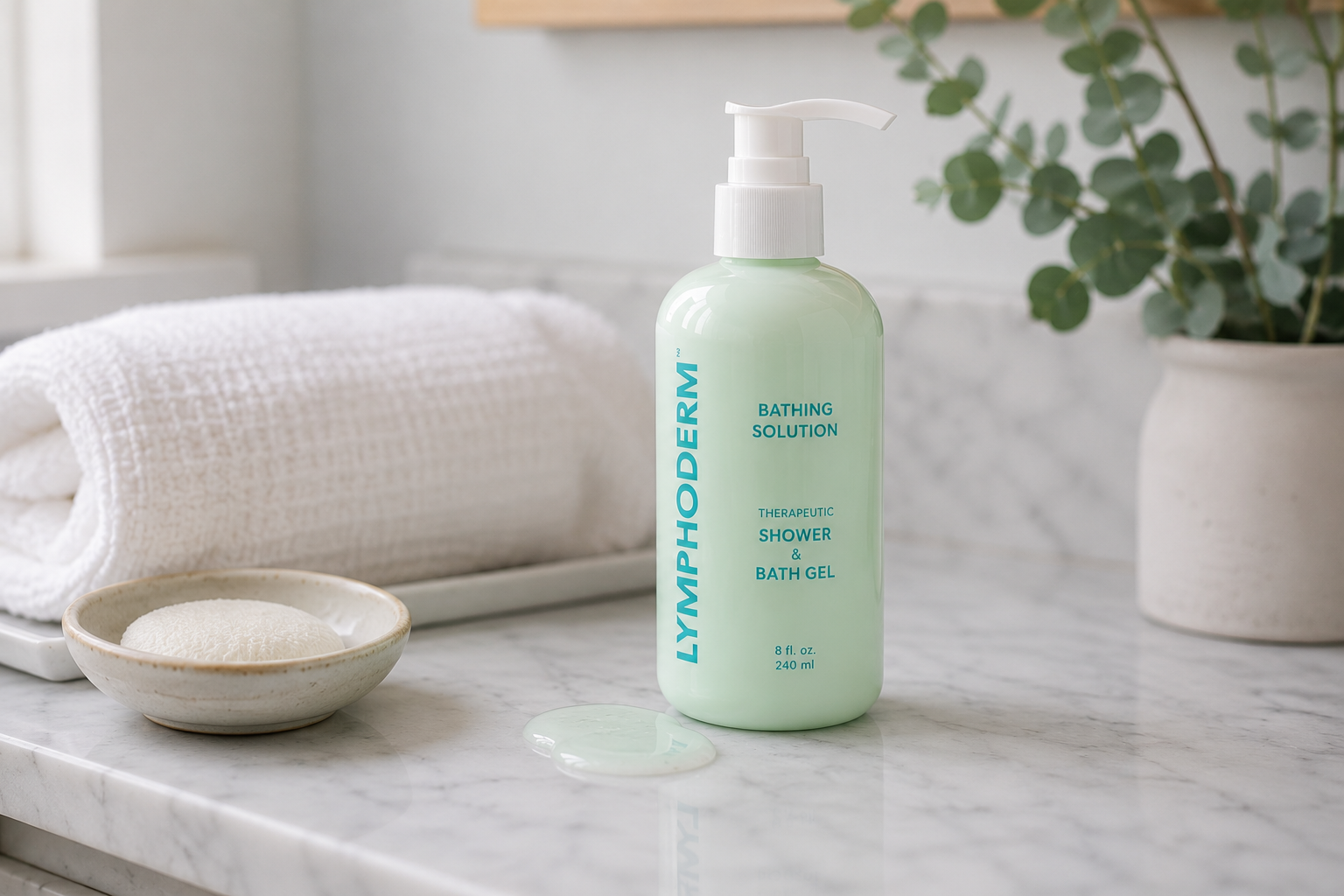
The Lymphoderm Bathing Solution was developed specifically for the lymphedema community. It's pH-balanced, fragrance-free, and formulated to cleanse gently without stripping vulnerable skin. Pair it with Lymphoderm Lotion for fast-absorbing hydration that supports barrier health and won't interfere with compression.
Born in a hospital-based Manual Lymphatic Drainage clinic and trusted for decades by people who understand that skin care is health care.