Lymphedema Skin Care Routine: The Simple Daily Cleanse + Moisturize Plan (For Dry, Fragile Skin)
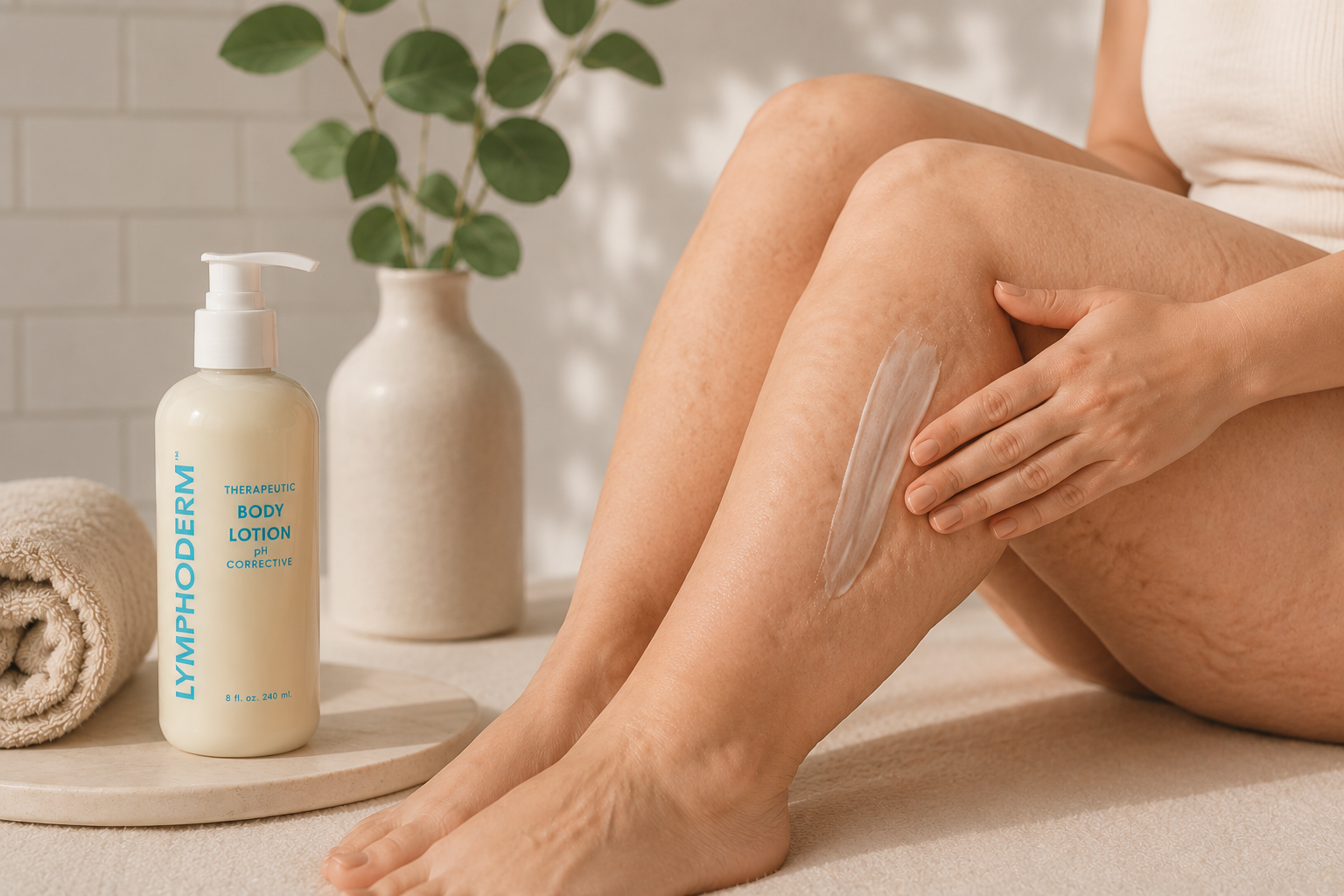
If you're living with lipedema, you know the constant challenge of managing swelling, discomfort, and the toll it takes on your skin. Compression garments help with fluid management, but they can also create new problems: dryness, chafing, irritation, and skin that feels perpetually uncomfortable. So how do you protect your skin while staying consistent with compression therapy?
Why Lipedema Skin Needs Different Care
Lipedema isn't just about fat distribution or swelling. It affects your skin in specific ways that require targeted care. The condition causes abnormal fat cell deposits, typically in the legs, thighs, and sometimes arms, which creates unique skin challenges.
Here's what happens to lipedema skin:
Increased fragility – The stretching and inflammation associated with lipedema can weaken the skin barrier
Heightened sensitivity – Many people with lipedema report skin that's more reactive to products, fabrics, and temperature changes
Chronic dryness – Compromised barrier function means moisture escapes more easily
Bruising and tenderness – Lipedema skin bruises more readily and can feel painful to the touch
Compression-related friction – Garments that help manage swelling can also rub, chafe, and dry out skin
Without proper lipedema skin care, these issues compound. Dry skin cracks. Cracks become openings for infection. Irritation makes wearing compression unbearable, which means you skip treatment, which worsens swelling. It's a cycle you need to break.
The Compression Paradox: Helping and Hurting Your Skin
Compression therapy is a cornerstone of lipedema management. It helps reduce fluid buildup, eases discomfort, and can slow progression. But compression garments create their own set of skin challenges.
How compression affects lipedema skin:
Moisture trapping – Sweat and humidity can get trapped under tight fabric, leading to maceration
Friction and chafing – Constant contact, especially at seams or edges, creates irritation
Reduced breathability – Even high-quality compression limits airflow, which can worsen dryness
Product interference – Heavy or greasy lotions make garments slip or feel uncomfortable
This is why generic body lotions often fail for people with lipedema. You need products that hydrate deeply but absorb quickly, so your skin gets protection without the sticky residue that makes compression therapy miserable.
[Internal link to: Lymphedema Skin Care Routine]
The Essential Lipedema Skin Care Routine: Cleanse + Hydrate
Just like with lymphedema management, lipedema skin care doesn't need to be complicated. What it needs to be is consistent and designed for the reality of compression therapy.
Step 1: Gentle, Non-Stripping Cleansing
When your skin is already dry and sensitive, harsh cleansers make everything worse. You need to remove sweat, oils, and any product buildup without stripping your skin's protective barrier.
What to use:
pH-balanced cleansers (around 4.5-5.5 to match your skin's natural acidity)
Fragrance-free formulations that won't trigger sensitivity
Sulfate-free products that cleanse without harshness
Gentle enough for twice-daily use
When to cleanse:
Morning: Before applying compression
Evening: After removing compression, to refresh and reset skin
How to cleanse properly: Use lukewarm water (never hot, which increases inflammation and dryness). Apply cleanser with gentle circular motions, avoiding scrubbing or pulling. Rinse thoroughly, especially in creases and folds. Pat dry with a soft towel, never rub.
Step 2: Fast-Absorbing Hydration That Works Under Compression
This is where most lipedema skin care routines fail. You need serious hydration, but heavy creams create a barrier between your skin and your compression garments. They feel greasy, make garments slip, and can even cause fabric breakdown over time.
What you need in a lipedema moisturizer:
Fast absorption with no greasy residue
Deep hydration that lasts through hours of compression
Barrier-supportive ingredients that fortify vulnerable skin
Free of irritating fragrances and unnecessary additives
When to moisturize:
After morning cleansing, before compression (wait 2-3 minutes for full absorption)
After removing compression in the evening (apply generously)
Any time skin feels tight, dry, or uncomfortable
Application technique: Apply in gentle upward strokes following the direction of lymphatic flow. Pay extra attention to areas prone to chafing: inner thighs, behind knees, ankles, anywhere garment seams sit. Don't skip creases and folds where moisture accumulates and skin can break down.
[Internal link to: Best Soap for Lymphedema]
Key Ingredients for Lipedema Skin Protection
Not all moisturizers are formulated equally. For lipedema skin care, certain ingredients offer targeted benefits that go beyond basic hydration.
Mineral-Rich Nourishment
Trace minerals from sources like seaweed provide elements the skin can absorb and use to support barrier function. Think of it as nourishment, not just surface hydration.
These minerals help skin feel more resilient and better able to handle the daily stress of compression therapy.
Botanical Support
Certain plant extracts offer soothing properties that calm reactive, sensitive skin without adding harsh actives or potential irritants.
Humectants That Draw and Hold Moisture
Ingredients like glycerin and hyaluronic acid pull moisture into the skin and help it stay there, which is critical when compression creates a constantly drying environment.
Barrier-Repairing Components
Ceramides, fatty acids, and similar compounds help rebuild and maintain the skin's protective barrier, reducing water loss and improving overall skin resilience.
Preventing Compression-Related Skin Problems
Beyond your daily cleanse and moisturize routine, there are specific strategies to protect lipedema skin from compression-related damage.
Strategy 1: Create a Protective Layer Before Compression
Think of moisturizer as a buffer between your skin and your garments. Properly hydrated skin is more resistant to friction and less likely to chafe or crack.
Apply your fast-absorbing moisturizer and wait 2-3 minutes before putting on compression. This brief window allows full absorption so there's no slippage, but your skin is protected.
Strategy 2: Check Garment Fit Regularly
Lipedema can be progressive, and your body may change. Garments that fit perfectly six months ago might now be too tight or too loose, creating new pressure points and friction areas.
Work with a certified fitter to reassess regularly and replace garments as needed.
Strategy 3: Use Barrier Protection for High-Friction Areas
If certain spots consistently chafe (inner thighs, behind knees, tops of feet), consider using specialized friction barriers or protective sleeves under your compression.
Some people find that a thin layer of fast-absorbing moisturizer in these zones, reapplied midday if needed, provides sufficient protection.
Strategy 4: Give Your Skin Breathing Time
Whenever possible, give your skin breaks from compression. During these windows, cleanse gently and apply moisturizer generously to support recovery and repair.
Overnight is often ideal for this deeper hydration treatment, allowing your skin to absorb and rebuild without the constant pressure of garments.
Addressing Common Lipedema Skin Complaints
Let's tackle the most frequent skin issues people with lipedema face and how to manage them.
"My Skin Is Always Dry No Matter What I Use"
This usually means one of two things: your moisturizer isn't penetrating deeply enough, or your skin barrier is so compromised it can't hold onto moisture.
Solution: Switch to a formulation designed for vulnerable, barrier-compromised skin. Apply immediately after bathing when skin is slightly damp. Layer if needed: a fast-absorbing product first, then a slightly richer one on particularly dry areas at night.
"I Get Chafing and Irritation Where My Garments Sit"
Friction plus dryness equals breakdown. This is a sign you need both better hydration and potentially better garment fit.
Solution: Moisturize thoroughly before compression, focusing on problem areas. Check that garments aren't creating excessive pressure or bunching. Consider silicone-based barrier products for severe chafing zones.
"My Skin Feels Itchy and Irritated Under Compression"
Itching can come from dryness, heat, product sensitivity, or a combination.
Solution: Make sure all products are fragrance-free and formulated for sensitive skin. Cleanse more frequently if you're sweating under garments. Apply cooling, soothing moisturizer. If itching persists, consult your healthcare provider to rule out dermatitis or other conditions.
"I Bruise Easily and My Skin Feels Painful"
This is common with lipedema due to fragile capillaries and inflammation. While moisturizing won't stop bruising, it can help protect the skin surface from additional trauma.
Solution: Handle skin gently when cleansing and applying products. Avoid any products with rough exfoliants. Report significant bruising or pain changes to your doctor, as it may indicate disease progression or other issues.
[Internal link to: Dry Skin Under Bandages or Wraps]
The Connection Between Skin Care and Overall Lipedema Management
Proper lipedema skin care isn't separate from your overall treatment plan. It's an integral part of managing the condition effectively.
How skin care supports other treatments:
Enables consistent compression use – Comfortable skin means you can tolerate garments longer
Reduces infection risk – Healthy, intact skin is a protective barrier against cellulitis and other infections
Improves quality of life – When your skin feels good, you feel better overall
Supports surgical outcomes – If you pursue liposuction or other interventions, healthy skin heals better
Research on chronic conditions involving edema and altered tissue consistently emphasizes that skin integrity is a key factor in preventing complications and maintaining function.
What About Inflammation and Lipedema Skin?
Lipedema involves chronic inflammation, which affects not just the fat tissue but the skin above it. While topical skin care can't treat the underlying inflammation, it can support the skin's ability to cope with it.
How to approach inflammation-affected skin:
Use gentle, non-irritating products that don't add to inflammatory burden
Avoid potential triggers like fragrances, dyes, and harsh chemicals
Focus on barrier support and hydration
Cool (not hot) water for cleansing can feel soothing
Consider products with calming botanical ingredients
If you're on anti-inflammatory medications or supplements for lipedema, your skin care routine should complement those treatments by keeping the skin barrier strong and protected.
Creating a Lipedema Skin Care Schedule You'll Actually Follow
The best routine is the one you do consistently. Here's a realistic daily schedule that fits around compression therapy.
Morning Routine (5 minutes)
Cleanse with gentle, pH-balanced wash
Pat dry
Apply fast-absorbing moisturizer
Wait 2-3 minutes
Put on compression garments
Evening Routine (7 minutes)
Remove compression garments
Cleanse to remove sweat and buildup
Pat dry
Apply moisturizer generously (this is your recovery hydration)
Allow skin to breathe overnight or until next compression session
Weekly Check (5 minutes)
Inspect skin for any cracks, irritation, or changes
Check compression garment condition (worn elastic, frayed seams)
Assess if routine is working or needs adjustment
That's it. Simple, repeatable, and designed around real life with lipedema.
FAQs About Lipedema Skin Care
What is the best moisturizer for lipedema?
The best moisturizer for lipedema is one that absorbs quickly without greasiness (critical for compression wear), supports the skin barrier with nourishing ingredients, and is free of fragrances and irritants. Look for formulations developed for vulnerable or compromised skin with minerals, botanicals, or barrier-repairing components.
Can I wear compression without moisturizing first?
You can, but you shouldn't. Moisturizing before compression creates a protective barrier that reduces friction and chafing. It also supports skin barrier function during the hours your skin is under pressure. Use a fast-absorbing product so there's no slippage or residue.
How do I prevent chafing from compression garments?
Prevent chafing by moisturizing thoroughly before putting on garments, ensuring proper fit (not too tight or too loose), applying extra product to high-friction areas like inner thighs and behind knees, and checking that garment seams aren't creating pressure points. If chafing persists, consider barrier products or protective sleeves.
Should I use different products for lipedema than for lymphedema?
The skin care needs are very similar. Both conditions involve vulnerable, dry, friction-prone skin that requires gentle cleansing and fast-absorbing hydration. Products developed for lymphedema skin care often work excellently for lipedema because they address the same core challenges: barrier support, compression compatibility, and non-irritating formulation.
Can lipedema cause skin infections?
Yes. Compromised, dry, or cracked skin creates openings where bacteria can enter, increasing the risk of cellulitis and other infections. This risk is higher in areas with poor lymphatic drainage (which often overlaps with lipedema). Maintaining skin integrity through proper cleansing and hydration is a key preventive measure.
Why does my skin feel worse after I started compression therapy?
Compression can initially increase dryness and friction, especially if your skin wasn't properly prepared or if you're not using the right skin care products. Make sure you're cleansing and moisturizing before and after compression, using fragrance-free products, and that your garments fit correctly. If irritation continues, consult your healthcare provider or certified fitter.
The Bottom Line: Protect Your Skin While Managing Lipedema
Living with lipedema means your skin is under constant stress from inflammation, compression, and the physical changes of the condition itself. A simple, consistent skin care routine focused on gentle cleansing and fast-absorbing hydration can make the difference between skin that's constantly uncomfortable and skin that feels protected and resilient.
You don't need a complicated 10-step routine. You need products that work with your reality: compression therapy, sensitive skin, and the need to actually get dressed and move through your day without greasy residue or irritation.
Your skin is part of your lipedema management strategy. Taking care of it isn't optional, but it can be simple.
Ready for Lipedema Skin Care That Actually Works With Compression?
If you're tired of lotions that make your compression garments slip, cleansers that strip your already-dry skin, or products that weren't designed for the specific challenges of lipedema, there's a better option.
The Lymphoderm Starter System was developed in a hospital-based clinic for people managing edema-related skin challenges. It includes a gentle bathing solution and a fast-absorbing, mineral-rich lotion that supports barrier health without the greasy layer that interferes with compression.
Born from clinical need and refined over decades of real-world use by people who understand that skin care is health care.